
Integrated sinks & backsplashes
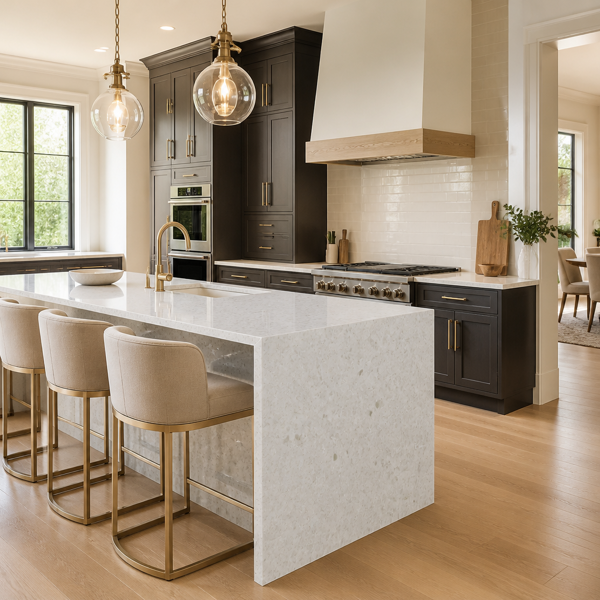
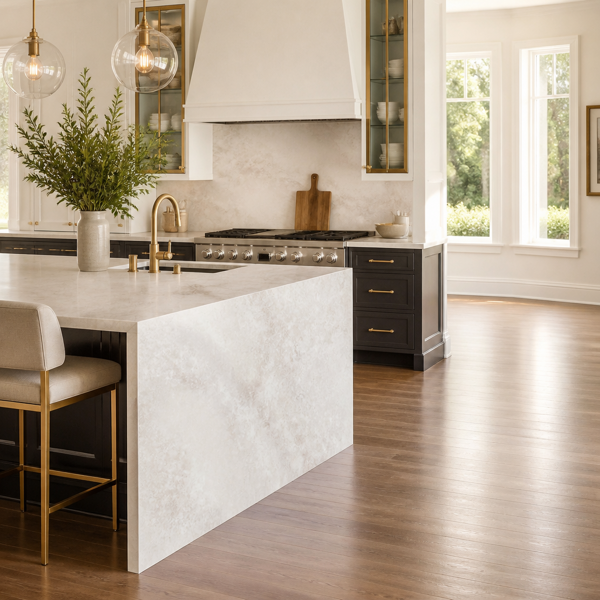
Because solid surface can be seamlessly joined, sinks and backsplashes flow from the countertop with no joints to trap grime.
Acrylic solid surface bonds to itself invisibly — countertop, sink, and backsplash can come out of the shop as a single piece.
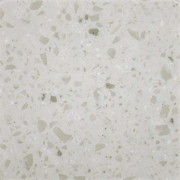
Solid surface is an acrylic or polyester resin filled with mineral powder, cast into sheets that are homogeneous all the way through. Because the material is the same at the surface as it is in the middle, two pieces can be glued, cured, and sanded flat into a joint you cannot see or feel.
That single property drives every reason to choose it. An undermount sink becomes an integrated sink with no rim, no caulk line, and no gap to trap grime. A backsplash rises out of the countertop as a coved curve rather than meeting it at a silicone joint. A twelve-foot run has no seam. In bathrooms, laundry rooms, and any space where cleaning matters more than geological drama, that continuity is worth more than a slab of stone.
It is also the most workable surface in the shop. Solid surface routs like hardwood, thermoforms over a mould into curves, and accepts inlays and edge details that no stone would survive. And because damage is only ever surface-deep, a scratch, a scuff, or a cigarette burn sands out and repolishes to match — the countertop is genuinely renewable, which is a claim quartz and porcelain cannot make.
Seamless, joint-free surfaces with no visible seams
Non-porous and hygienic — easy to wipe clean
Integrated sinks and backsplashes from a single material
Scratches and scuffs sand out and repolish
Because solid surface can be seamlessly joined, sinks and backsplashes flow from the countertop with no joints to trap grime.
Shaped, moulded, and thermoformed to order — ideal for curved islands, waterfall edges, and one-of-a-kind designs.
A non-porous surface keeps kitchens and baths easy to clean and sanitary for years of everyday use.
Acrylic resin softens well below the temperature of a pan coming off a burner, so direct heat can leave a dull mark, a blister, or in the worst case a crack where a hot spot cooled unevenly. Trivets are genuinely required, not merely advisable, and a strip of stone or a metal trivet inset next to the cooktop is a common and worthwhile detail. The upside of the same softness is that most heat marks are shallow enough to sand out.
A solid surface countertop will pick up fine scratches and cutting marks from normal use, more readily than quartz or granite. Because the colour runs through the full thickness, none of it is permanent: a matte finish is refreshed with a scouring pad, and deeper damage is sanded and repolished by hand. Choosing a matte or satin finish over high gloss, and a mid-tone pattern over a solid dark colour, makes day-to-day wear far less visible in the first place.
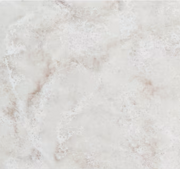
Modern solid surface patterns imitate stone convincingly at a distance, but up close the material has its own soft, warm, slightly matte character rather than the depth of quarried stone or the crispness of porcelain. Specified honestly — as a clean, continuous, hygienic surface — it looks excellent. Specified as a granite substitute, it disappoints. It is at its strongest in bathrooms, laundry and utility rooms, wet bars, and commercial-style spaces where the seamless detailing is the design.
Soapy water and a cloth for daily cleaning; an ammonia-based cleaner for anything filmy. On a matte finish, a white scouring pad worked in a circular motion removes marks and evens the sheen — the same trick that makes the surface renewable also means you can do most maintenance yourself. Always use a cutting board and always use a trivet. Avoid drain cleaners, paint remover, and strong solvents, which can attack the resin, and rinse them off immediately if one is spilled.
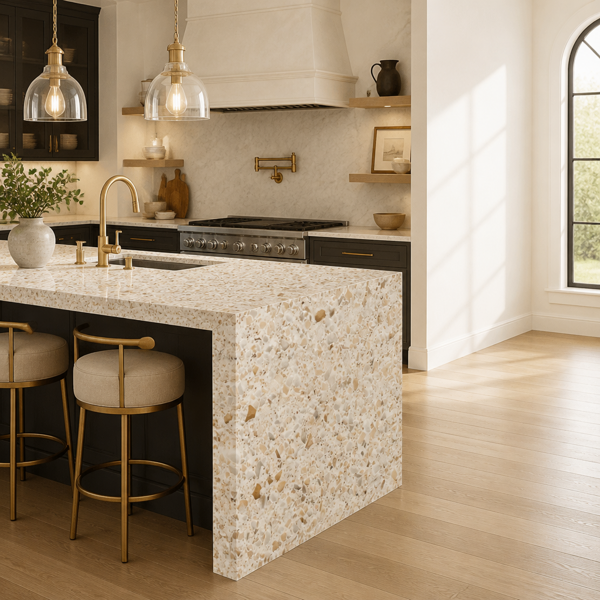
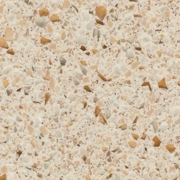
It is a cast sheet of acrylic or polyester resin filled with mineral powder — Corian is the best-known brand. The material is homogeneous through its full thickness, which is what allows pieces to be bonded into joints that are invisible and countertops to be repaired by sanding.
It usually sits below quartz and most natural stone in material cost, though fabrication of integrated sinks, coved backsplashes, and thermoformed curves adds labour. Where it saves money outright is in bathrooms and utility spaces, and in long runs where a stone job would need extra slabs.
Yes, and this is its main advantage. Scratches, scuffs, stains, minor heat marks, and even chips are sanded out and repolished, because the colour and pattern continue through the full thickness. A ten-year-old top can be brought back close to new.
No. Direct heat can dull, blister, or crack the surface, so trivets and hot pads are necessary. Most heat damage can be sanded out afterwards, but it is far easier to avoid.
It is non-porous, so liquids cannot soak in and there is nowhere for bacteria to establish. Combined with seamless joints and an integrated sink with no caulk line, that makes it one of the most hygienic countertop options available — which is why it is standard in healthcare settings.
Book a free in-home consultation and we will map out sinks, splashes, and joints for your space. Call 214.327.5975 any weekday.