
Busy family kitchens
Quartz handles daily cooking, cleanup, homework, and hosting without asking for complicated maintenance.
Quartz countertops bring timeless style, everyday durability, and an easier upkeep routine to Dallas-area homes.
Quartz is a practical choice when you want the look of stone with fewer maintenance decisions after installation. KAT helps you compare samples, measure the room, fabricate the tops, and install them with one local team.
Quartz is an engineered surface: roughly 90–95% crushed natural quartz bound with polymer resins and pigment, pressed and cured into slabs. That manufacturing step is what makes it behave so differently from the stone it is made of. The resin fills the pores, so the finished slab is non-porous — it never needs sealing, it will not absorb red wine or olive oil, and bacteria have nowhere to settle.
It also means the pattern is designed rather than quarried. If you have ever picked a granite slab from a photo and then been surprised by the piece that arrived, quartz removes that risk: the sample in your hand is what goes into your kitchen. For open-plan Dallas homes where the island, the perimeter run, and a butler’s pantry all need to read as one surface, that consistency is usually the deciding factor.
Resists everyday stains and spills
Consistent patterns make selection easier
No sealing required for normal residential use
Durable enough for busy kitchens and baths
Quartz handles daily cooking, cleanup, homework, and hosting without asking for complicated maintenance.
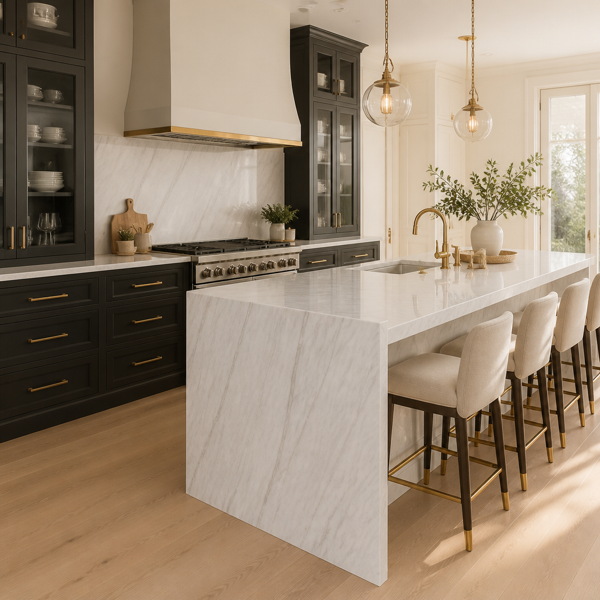
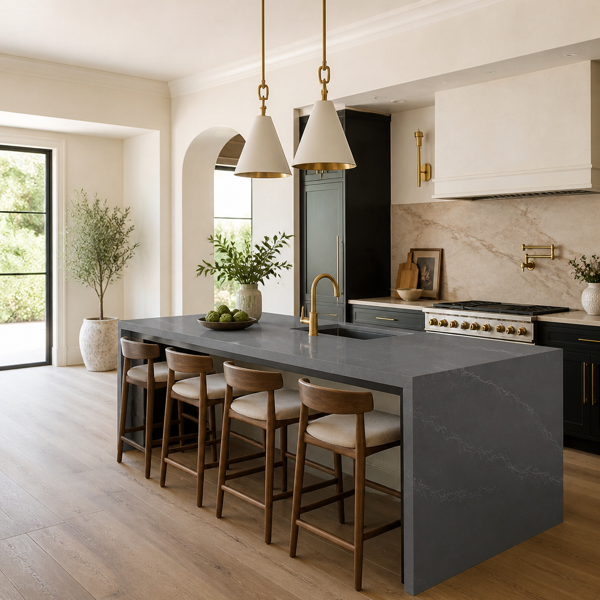
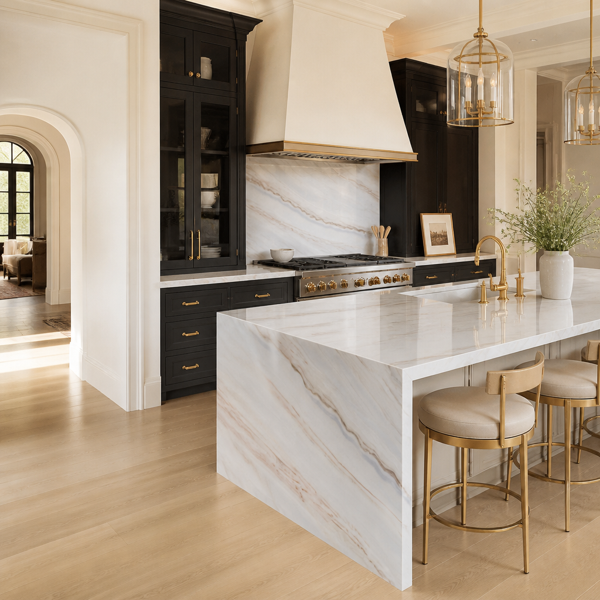
Choose soft whites, warm neutrals, or bold veining when the room needs a polished, pulled-together surface.
Engineered slabs make color and pattern easier to preview before fabrication begins.
The resin that makes quartz non-porous is also the part that reacts to heat. A pan straight off the burner can scorch or discolour the surface, and a sustained hot spot can cause a hairline crack. Trivets are not optional with quartz the way they are with granite. If you routinely set cast iron down next to the cooktop, say so during the consultation — that single habit often points toward granite, quartzite, or a porcelain surround instead.
Ultraviolet light breaks down the resin binder over time, which shows up as yellowing on whites and fading on darker colours. That rules quartz out for covered patios and outdoor kitchens, which matters in North Texas where outdoor living space gets used most of the year. It also means a west-facing window over a long counter run is worth mentioning — porcelain is the usual answer for anything that takes hours of direct afternoon sun.
Quartz is sold in fixed slab sizes, so an island longer than about ten feet will have a seam. A good fabricator plans where that seam lands — behind a sink, at an inside corner, away from the sightline as you walk into the room — rather than letting the slab dimensions decide. Because the material is uniform all the way through, mitred edges can be built up to read as a thick slab, and the seam in a mitre disappears in a way it never does in patterned natural stone.
Warm water, a soft cloth, and a mild dish soap handle everything routine. Skip abrasive powders, scouring pads, and anything strongly alkaline or acidic — oven cleaner, drain cleaner, undiluted bleach — since those attack the resin rather than the stone. Wipe up spills when you see them out of habit, not urgency: a non-porous surface gives you time. There is no sealing schedule and no annual service call.

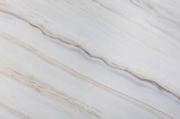
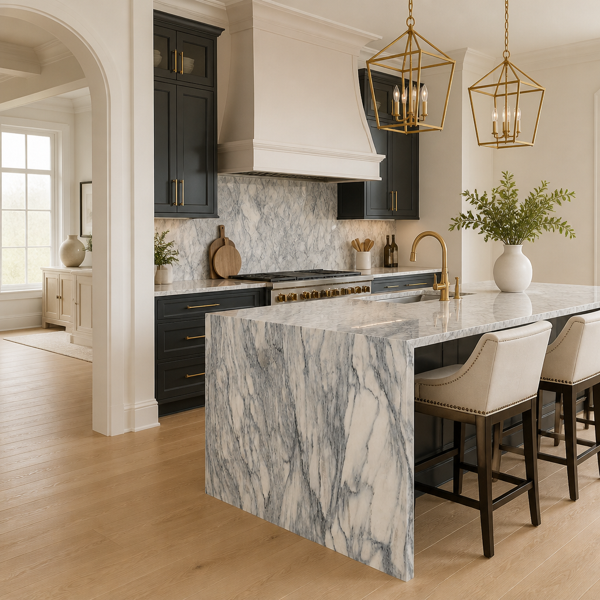
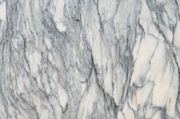
Neither is better across the board. Quartz is non-porous, never needs sealing, and gives you a consistent pattern you can see before fabrication. Granite is more heat-resistant, handles direct sun, and every slab is one of a kind. Households that cook hot and hard usually prefer granite; households that want predictable looks and no maintenance calendar usually prefer quartz.
No. UV exposure degrades the resin binder, causing yellowing and fading, and manufacturers exclude outdoor installations from their warranties. For a Dallas patio or outdoor kitchen, porcelain or granite are the durable choices.
Very rarely, because there are no pores for a spill to soak into. Coffee, wine, and turmeric sit on the surface and wipe off. What does mark quartz is chemical damage from harsh cleaners and heat damage from hot pans, and neither of those buffs out the way a stain would.
Most residential quartz is 2 cm or 3 cm. A 3 cm slab installs as a solid edge with no build-up; 2 cm is often laminated at the edge to look thicker while using less material. Both are strong enough for normal spans, though overhangs and unsupported bar tops need to be checked against the thickness during templating.
Schedule a consultation or call us to talk through your project. Call 214.327.5975 any weekday.