
Outdoor kitchens and patios
North Texas sun, summer heat, and winter cold snaps do not fade, crack, or discolour porcelain the way they affect engineered surfaces.
Heat-proof, scratch-proof, UV-stable, and available in slabs big enough to skip the seams — indoors or out.
Porcelain countertops are sintered ceramic — refined clay and mineral pigment pressed under enormous force and fired until the material vitrifies into a single dense body. The result is effectively impervious: no sealing, no staining, no reaction to heat or sunlight.
The performance numbers are the reason to consider it. Porcelain shrugs off a pan taken straight from the burner, resists scratching from anything short of a diamond, cleans up with whatever is under your sink including bleach, and holds its colour in full sun indefinitely. For a Dallas outdoor kitchen — where quartz yellows and marble etches in the weather — it is often the only surface that makes sense.
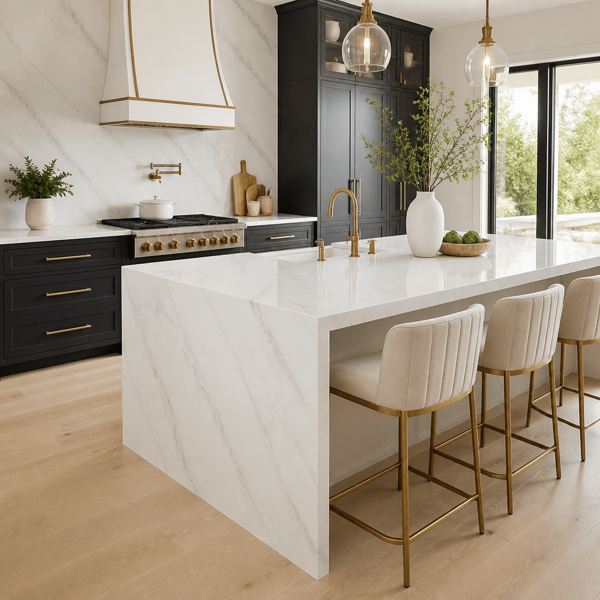
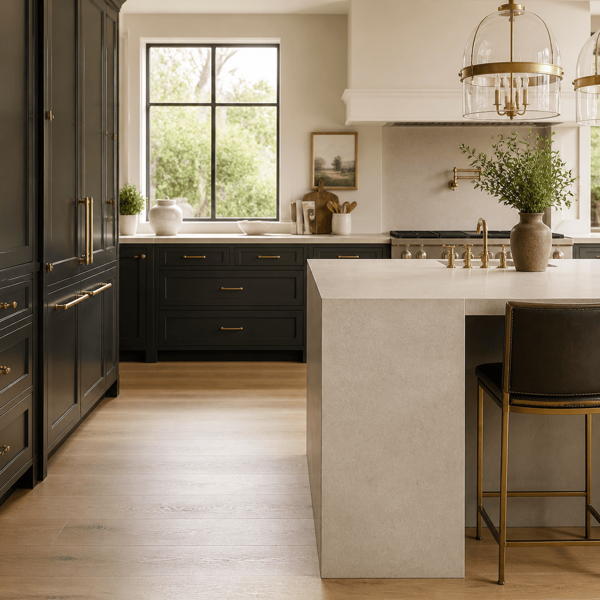
The other reason is scale. Porcelain arrives in large-format slabs, commonly around 126 by 63 inches and available as thin as 6 mm, so a long island can run seamlessly and the same material can be carried up a backsplash or wrapped down the side of a cabinet run without a joint. That thinness is what makes the razor-thin modern edge profile possible, and it is why porcelain shows up in contemporary kitchens far more often than traditional ones.
Genuinely heat-proof — no trivet required
UV-stable, so it works outdoors and in full sun
Non-porous with no sealing, ever
Large-format slabs mean fewer seams
North Texas sun, summer heat, and winter cold snaps do not fade, crack, or discolour porcelain the way they affect engineered surfaces.
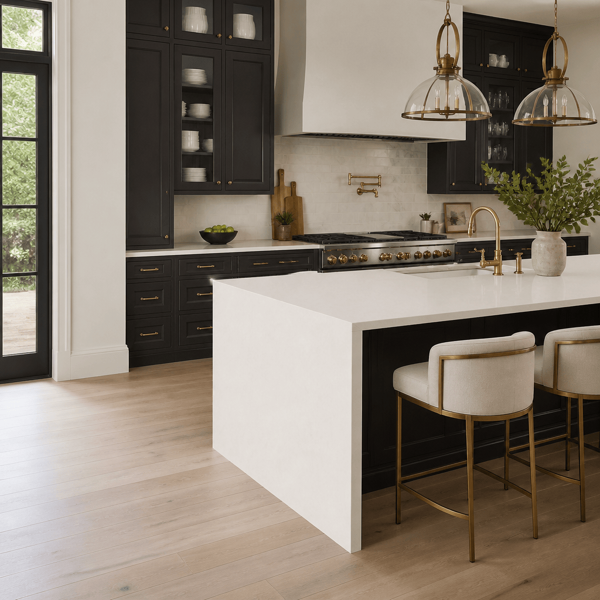
Thin slabs, mitred edges, and full-height matching backsplashes give the flush, monolithic look that a contemporary design calls for.
Cast iron off the burner, a roasting pan out of the oven, a hot kettle — porcelain takes all of it without a mark.
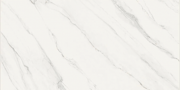
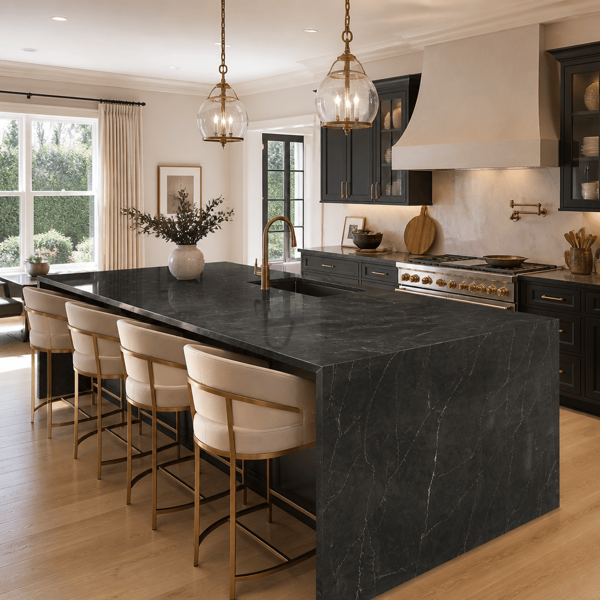
Most porcelain slabs carry their veining as a decorative layer applied before firing, not distributed through the body. That is fine in normal use — the layer is fused glass-hard and will not wear off — but it means a deep chip can expose the paler body underneath, and an exposed raw edge shows a plain profile rather than continuous veining. Through-body porcelain exists and solves both, at a higher price. If you want a thick mitred edge with veining that wraps the corner, ask specifically for a slab whose pattern continues on the edge.
The same hardness that makes porcelain scratch-proof makes it brittle. The face of an installed top is very hard to damage; the corners, the raw edges before they are finished, and the areas around sink and cooktop cutouts are where a sharp impact can chip. This is mostly a fabrication and handling question rather than a living-with-it question — thin large-format slabs need proper vacuum lifting, reinforced cutouts, and a fully supported substrate. It is worth asking any fabricator how much large-format porcelain they actually cut.
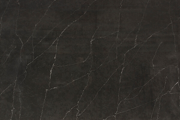
Porcelain is a manufactured surface and, in person, it looks like one: crisp, flat, and even. Held next to a slab of quartzite, the veining is a very good reproduction rather than a geological event, and the surface has a harder, more uniform feel. In a modern kitchen that precision is exactly the point. In a room built around warmth and natural texture, natural stone or a warmer quartz will usually feel more at home.
This is the least demanding surface we fabricate. Soap and water for daily cleaning, and effectively any household cleaner — including bleach and degreasers — for anything stubborn, with no sealing schedule at all. The only real habits worth keeping are avoiding hard impacts near the edges and corners, and using a cutting board, since porcelain is harder than your knives and will dull them quickly.

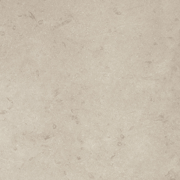
For heat, sunlight, and outdoor use, yes, clearly — porcelain has no resin to scorch or yellow. Quartz has the edge on warmth of appearance, through-body colour at the edges, and a wider bench of fabricators experienced with it. Indoors, away from windows, the choice is mostly aesthetic; outdoors it is not a contest.
The face is extremely difficult to damage. Edges and corners can chip under a sharp impact, because the material is hard and therefore brittle. Careful fabrication, a properly supported substrate, and a slightly eased rather than knife-sharp edge profile make it a non-issue in normal use.
Yes. Porcelain is UV-stable, freeze-thaw stable, and unaffected by heat, so covered patios, grill surrounds, and outdoor bars are among its strongest applications here.
Slabs are commonly 6 mm, 12 mm, and 20 mm. Thin slabs are used where a razor edge or an overlay is wanted; 12 mm and 20 mm are typical for standalone countertops, and a mitred edge can be built up from a thinner slab to read as a thick slab.
Yes. Porcelain is fired at temperatures far above anything a kitchen produces, and it will not scorch, discolour, or crack from a hot pan. It is the one countertop material where a trivet is genuinely optional.
Book a free in-home consultation and we will show you what large-format porcelain can do. Call 214.327.5975 any weekday.