
Islands that carry the design
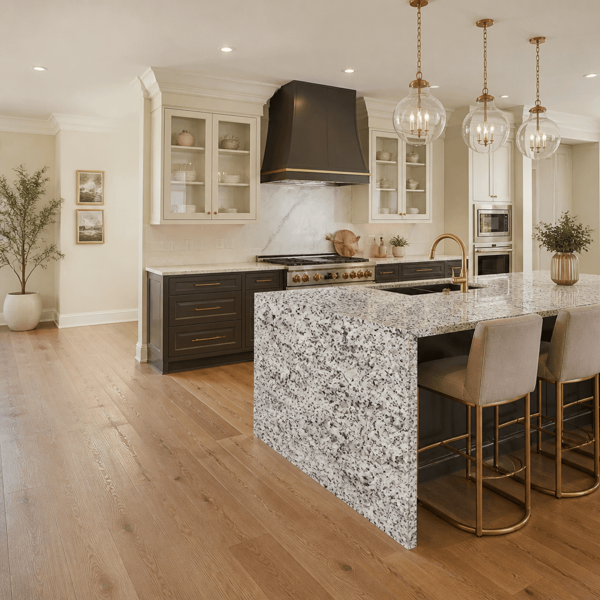
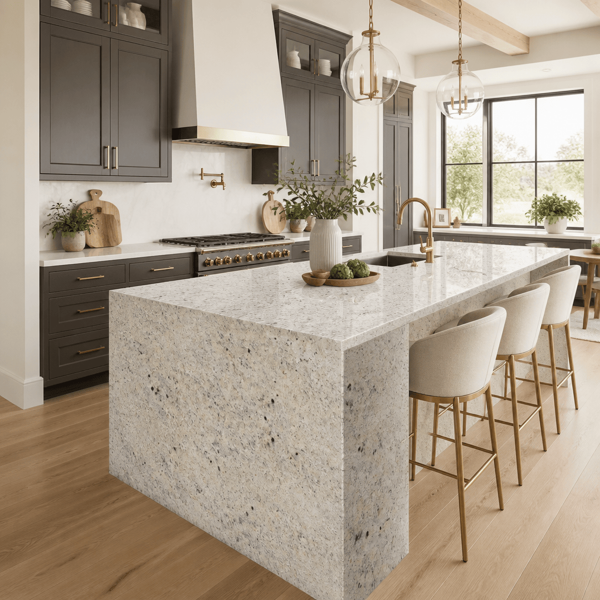
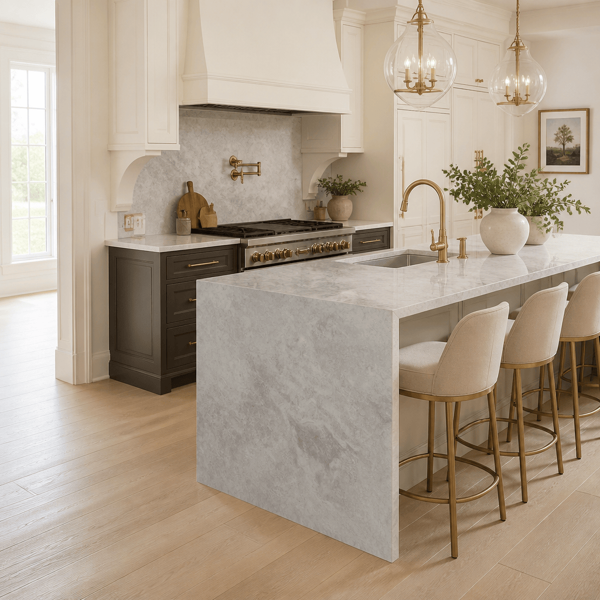
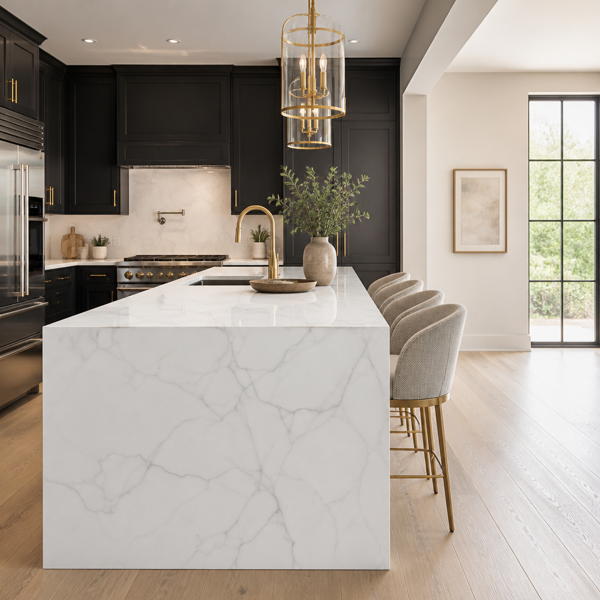
A dramatic quartzite or exotic granite island earns its keep as the focal point of an open-plan kitchen, with quieter surfaces around it.
Granite, marble, and quartzite cut from full slabs in our Dallas shop — the veining you picked is the veining you get.
Natural stone is the only countertop material where the pattern was decided a few hundred million years before you started your remodel. Granite, marble, and quartzite each come out of the ground with their own colour, veining, and personality — and KAT cuts them, polishes the edges, and installs them with our own team.
The three stones behave differently enough that they are really three decisions, not one. Granite is igneous — cooled magma, speckled and crystalline, hard and heat-proof, the workhorse of the group. Marble is metamorphosed limestone: soft, luminous, and famously reactive to anything acidic. Quartzite starts as sandstone and is recrystallised under pressure into something that often looks like marble but tests as hard as or harder than granite.
What they share is that you choose an actual slab, not a sample. That is the part homeowners either love or find daunting. Bring a cabinet door and a floor sample to the slab yard, look at the piece under real light, and decide where the movement should land — down the island, book-matched up a backsplash, or kept quiet along the perimeter. Once that slab is tagged, it is yours, and the layout gets planned around its veining rather than around a repeating pattern.
Every slab is genuinely one of a kind
Granite and quartzite take direct heat
Holds value and buyer recognition at resale
Repolishable — it can be refreshed decades later
A dramatic quartzite or exotic granite island earns its keep as the focal point of an open-plan kitchen, with quieter surfaces around it.
Granite and quartzite shrug off hot pans, and a marble section makes a genuinely excellent pastry surface that stays cool to the touch.
Granite handles Texas sun and temperature swings without fading, which is why it remains the default for covered patios and BBQ islands.
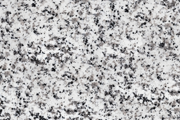
Hard, heat-proof, and forgiving of real use, granite is the stone that asks the least of you while still being genuinely natural. It is porous, so it takes a penetrating sealer, typically refreshed about once a year — a ten-minute job with a bottle from the hardware store, not a service call. Colours run from near-black and deep green through the warm speckled browns and the whites and greys that read almost like marble from across the room. It is also usually the most affordable natural option, which is why it still dominates North Texas kitchens.
Marble etches. Lemon juice, wine, vinegar, and tomato will dull the polish where they sit, and no sealer prevents it, because etching is a chemical reaction with the calcium carbonate rather than a stain soaking in. Some homeowners find that unacceptable; others read the resulting patina the way you would read a well-used copper pan, and specify a honed finish from the start so the etching never shows as a shiny mark. Marble is the right answer for a vanity, a baking station, or a low-traffic feature wall, and a hard conversation for a family kitchen.
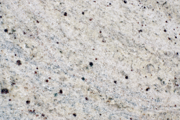
Quartzite is the stone people mean when they say they want marble that survives children. Whites and greys with grey or gold veining, hardness at or above granite, and full heat resistance — the catch is price and availability, since the material is genuinely scarce and the popular white quartzites move quickly. It seals like granite. It is also the most frequently mislabelled stone in the trade: soft "quartzites" that etch are usually dolomitic marble, so it is worth confirming what a slab actually is before committing to it.
Clean with warm water and a pH-neutral stone cleaner; skip vinegar, citrus cleaners, and anything abrasive, all of which attack the polish. Reseal granite and quartzite when water stops beading on the surface — an easy annual test with a few drops near the sink. Use trivets under anything from the oven out of habit even though granite and quartzite do not need them, cutting boards to protect your knives rather than the stone, and coasters on marble. Deep scratches and etch marks in natural stone can be honed and repolished on site, which is something no engineered surface can offer.

Quartz is engineered — crushed quartz bound with resin in a factory. Quartzite is 100% natural stone, formed when sandstone recrystallises under heat and pressure. Quartzite is harder and far more heat-resistant, but it is porous and needs sealing like granite. The names are similar; the materials are not.
Most granites do, roughly once a year, though dense dark granites can go much longer. The test is simple: put a few drops of water on the surface near the sink and wait fifteen minutes. If it beads, the seal is fine. If it darkens the stone, it is time to reseal.
It depends entirely on how you feel about etching. Marble will lose its polish where acidic food sits, and that is a permanent characteristic of the stone rather than a defect. Choosing a honed finish hides it, and many homeowners genuinely like the patina. If you want a countertop that looks new in ten years, quartzite gives you a similar look without the compromise.
Granite and quartz both perform reliably because buyers recognise them and know they are durable. Quartzite is increasingly sought after among buyers who know the material. Marble reads as luxury but narrows the pool of buyers who want to maintain it.
Yes, and you should. Photos flatten veining and shift colour. Seeing the full slab in person is the only way to judge how the movement will run across an island and where the layout should place the seams.
Book a free in-home consultation and we will walk you through granite, marble, and quartzite for your project. Call 214.327.5975 any weekday.